Month: March 2026

Rounding

Group 2 in LS2 have been revising on round numbers up to the billions.

Rounding is a useful skill to estimate. In this blog, we will be teaching you how to round. You need to know place values were you can find our example in our earlier blogs. To round you need a base number, I’ll pick a random one. (482.119) if rounding and you see a question asking to round to the nearest tenth you need to realise that the “th” means that it is in the decimal, not the whole number. in this number rounding to the nearest tenth would be the 1 after the 9 in the decimal place. due to the number being higher than 4, we round up. which is rounding to the nearest tenth. which would be 20 in this case. This would change the number to 482.120. I hope that this blog has taught you how to round.

Lowest Common Multiple

Group 2 of LS2 have been learning and some revising on “Lowest Common Multiples” (LCM). 

LCM consists of multiplication where you find the number in common between 2 numbers multiplication order. For an example you could use 4 and 7 up to 5 to find the LCM. You times both up to 5 and if there is the same number diagonal from eachother. (4, 8, 12, 16, 20.) and (7, 14, 21, 28, 35) in this case, there is no common multiple up to five. But if you know your four times tables if you add 2 on you can make it to 28, which the 7 times table has making it the answer.

Place Value

For maths group two, the task was to learn how to solve place value problems and how to use place value in different areas. Place value is the place of a digit in a number that tells us how much it is worth. For example, if there was an equation that said what is 100 more than 4,628,297, the
The answer would be 4,628,397.

Highest Common Multiple

This weeks Maths, group 1 is learning how to identify highest common factors. Highest common factors is basically the largest whole numbers that divides into two or more numbers without any remainders. Remember, factors are numbers that we can multiply together to get a number. For example: 6 x 8 = 48.


Johhny Pohe and the Great Escape

LI: To make an informed opinion

Our task was to create a DLO that shows both perspectives of this event. Our group considered whether or not the risks that Johnny Pohe took were very dangerous.

Something we found interesting was that Johnny Pohe was the first Maori to become an official pilot because he wanted to serve his country so he could protect the mana that lies beyond his culture


Building our class culture

LI: To collaborate to create a piece of art

For this task LS2 drew leaders back in the day, our leader is Jonah Lomu this task was about collaborating and learn to work with people you didn’t really know – you might need to talk about being a leader, listening, sharing ideas and compromising. Something I learnt from this was to collaborate with more people.

What is Social Influence and how does is affect us?

For Inquiry this week we have discussed as a class, what is “social Influence” and understand how to identify the difference between positive and negative social influence.

We also dug deeper into “Normative Influence” which means doing things to fit in and “Informational Influence”, is the things we do because we think others know more than us.

Something we found interesting was that social influence can really have a big affect on people.

Fly by night

LI: To write a narrative from the point of view of a baby owl on its first flight

Mrs Anderson read us the book ‘First Flight’ by June Crebbin. We talked about the narrators point of view and used a Gemini Gem to prompt us to think more deeply about what the story might look like when told in the first person. I enjoyed using the Gem because it helped me with hint. This was the story that we wote about.

The sun sets as the moon arises. I say to myself (I am so happy for my first time to fly) looking at my surroundings other owls call out my name to go fly with them. As I look down at the dark shadows below me I hear some squirrels down at the atmosphere. The little owlette’s eyes wide with curiosity, decided it wants to fly. The harsh wind blew, crisp and frosty, as the sun began to set, my talons grip loosened, the branch suddenly feeling slippery, my heart stopped for a little bit as my grip fades away. As I will be jumping off and soaring through the air tonight. My feathers seem to curl up, keeping me warm from the chilly breezes. My heart started thumping quickly, as I glanced at the dark forest below, a gust of wind blew over me smelling like dead trees through the wind.

I can’t bring myself to jump, the nerves take over my body. I’m petrified , unable to move, feeling a tingly sensation overcome my body. The height makes my stomach drop.

Trying to fly is really terrifying, especially when looking down, just pitch black with trees coming out of the darkness. It’s a bit hard to tell how far the ground is because of how high I am, that’s also why it’s scary. So I decided to practice flying by standing on my nest and extending my astounding wings as I attempted a jump that was from my nest, to a long piece of wood. As I kept practicing and practicing, over and over again I gathered up the courage to jump from my nest to the ground

I muster up all the courage I can, looking at the ground that threatens to claim me. With one final sharp breath I jump, a whoosh of air following me as I spread my majestic wings, flapping them marvelously, as I fly over the long blades of grass, and all of the bodies of water spread across the broad forest.

 

Place Value

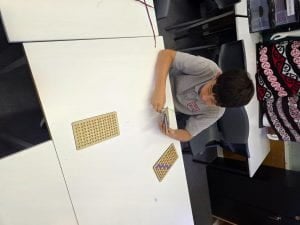
LI: How to identify place value up to the billions and three decimal places

For maths group one’s task was to learn how to solve place value problems and how we use place value in different area’s.  Place value is the place of a digit in a number that tells us how much it is worth. The number system is based on groups of ten, which means each place in a number is ten times bigger than the one to its right. Place value also has decimals, which help us show numbers that are smaller than one whole. The decimal point separates the whole number part from the smaller parts. To the right of the decimal point, each place value becomes ten times smaller than the one before it.